

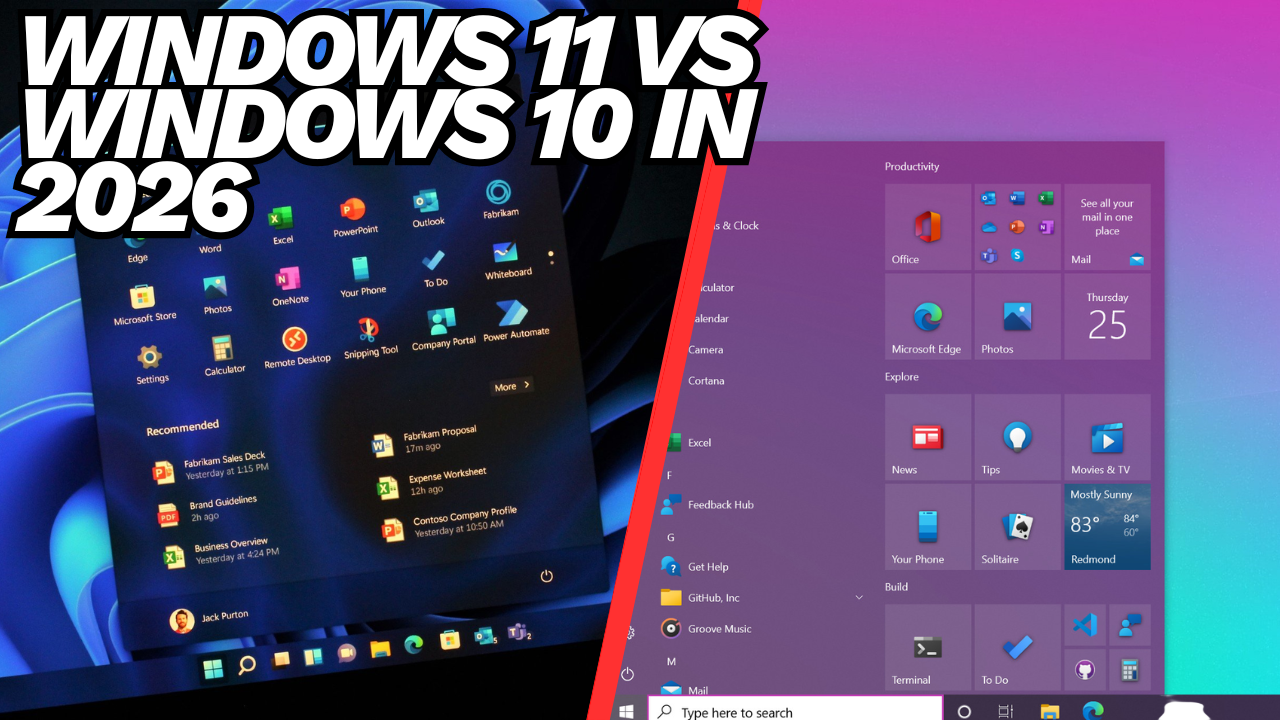
Windows 10 has been a reliable companion for many years. A lot of people stuck with it because it felt stable and familiar. But by 2026, Windows 11 has grown up. It is no longer the “new and risky” option. Microsoft is clearly investing in AI tools, stronger security, and support for modern hardware, which puts Windows 11 at the center of its plans.
So the real question now is simple: should you finally move on from Windows 10?
The Short Answer
If you have a fairly recent PC that supports Windows 11, upgrading in 2026 is generally a good idea. You get better security, smoother performance on modern hardware, and access to new AI driven features. Windows 11 is built with today’s and tomorrow’s technology in mind, which makes it appealing for work, gaming, and business use.
If your computer is older and does not meet requirements like TPM 2.0 or a supported CPU, staying on Windows 10 can still be reasonable for now. It will still run, and many people continue to use it. But this is more of a temporary solution than a long term plan.
Bottom line:
Upgrade if your PC supports it and you want to stay current and secure. Stick with Windows 10 only if your hardware makes upgrading unrealistic right now.
Support Status in 2026
By 2026, Windows 10 has reached the end of its normal support period. That means no regular free security patches or feature updates for most users. The system does not suddenly stop working, but using an unpatched OS slowly increases your risk. For those looking to upgrade safely, a Windows 12 ISO download can provide a smooth transition to the latest supported system.
There are paid Extended Security Updates for organizations that need more time. These are mostly for businesses managing large numbers of devices, not typical home users. If you want the newest features and ongoing updates, completing a Windows 12 ISO download ensures your system stays current and secure.
Windows 11 is fully supported. It receives ongoing security updates, bug fixes, and improvements. Since cyber threats keep evolving, active support is a big deal. Running a supported system today is less of a luxury and more of a necessity.
Hardware Requirements
The biggest hurdle for many people is hardware. Windows 11 requires TPM 2.0, Secure Boot, and newer CPUs. TPM is a small chip that helps protect encryption keys and system integrity.
Windows 10 runs fine without these features, which is why it works well on older machines.
Some people install Windows 11 on unsupported hardware, but that often leads to driver issues, update problems, or inconsistent performance. On properly supported machines, Windows 11 generally feels faster and more stable.
If your PC is aging, Windows 10 may actually be the safer and smoother option until you replace the device.
Performance in Daily Use
Windows 11 in 2026 is much more polished than it was at launch. Startup times are often quicker thanks to smarter background management. It also handles modern multi core processors more efficiently, which helps with multitasking.
For gaming, Windows 11 has a clear advantage. Technologies like DirectStorage and Auto HDR improve load times and visuals in supported games. New GPUs and drivers are also tuned with Windows 11 in mind.
Laptop users often see better battery management. The system does a better job balancing power and performance on newer chips.
Overall stability has improved a lot. For most users, Windows 11 now feels dependable for everyday work.
Features You Only Get on Windows 11
One major focus in 2026 is AI. Built in AI assistants can help find files, summarize content, tweak settings, and automate small tasks. These features are becoming part of daily workflows for many people.
Multitasking tools are also better. Window snapping, virtual desktops, and smoother task switching make busy screens easier to manage.
The interface looks cleaner and more consistent. Touch and stylus support are also noticeably better.
On the security side, Windows 11 includes hardware backed isolation and stronger phishing protection. These are tied to modern hardware and are not coming to Windows 10.
Security Differences
Security is where Windows 11 really pulls ahead. It follows a “verify first” philosophy where apps and processes must prove they are trustworthy.
Threat detection relies more on behavior analysis, not just known virus signatures. This helps catch new and unknown attacks.
Ransomware protection is also stronger, with features that protect important folders and use hardware level encryption.
Windows 10 simply cannot match some of these protections because they depend on newer hardware capabilities.
Software and Compatibility
Windows 10 still shines with legacy software. Some older business tools run best there, which is why certain organizations hold on to it. However, if you’re looking to explore the latest features, many users are already searching for ways to download Windows 12 ISO or check out Windows 12 ISO builds to see what’s next in Microsoft’s evolution.
Most new software in 2026 is optimized for Windows 11. Creative tools, professional apps, and productivity software increasingly take advantage of its newer design.
Hardware drivers follow the same pattern. Manufacturers focus more on Windows 11, which means quicker fixes and better long-term support.
Which OS Fits Which User?
Students
Newer laptops pair well with Windows 11. Faster startup, better battery life, and multitasking tools help with schoolwork. Older student laptops may run better on Windows 10.
Office Workers
Windows 11 offers smoother workflows, virtual desktops, and AI help that can save time. Windows 10 is fine for basic tasks but feels dated.
Gamers
If your hardware supports it, Windows 11 is the better gaming platform. New features and optimizations target it first.
Content Creators
Video editors, designers, and streamers benefit from improved resource handling and GPU use. New creative tools often favor Windows 11.
Businesses
For long term planning, Windows 11 is the safer bet due to security and ongoing updates. Paying for extended updates on Windows 10 adds cost.
Owners of Older PCs
If your machine does not meet requirements, forcing Windows 11 is rarely worth it. Staying on Windows 10 until you upgrade hardware is sensible.
A Simple Decision Guide
Upgrade if:
-
Your PC supports Windows 11
-
You care about security and privacy
-
You game or use demanding software
-
You want current features and support
Consider waiting if:
-
Your PC is old but still meets your needs
-
Upgrading means buying a new device right away
-
You rely on older software that works best on Windows 10
Pros and Cons
Windows 11 Pros
-
Stronger built in security
-
Better performance on modern PCs
-
AI and productivity features
-
Gaming improvements
Windows 11 Cons
-
Requires newer hardware
-
Not ideal for aging devices
-
Interface changes take adjustment
Windows 10 Pros
-
Great for older systems
-
Familiar and simple
-
Good legacy software support
Windows 10 Cons
-
Limited future updates
-
Weaker long term security
-
Missing new features
Common Questions
Is Windows 10 safe in 2026?
It can still be used, but without regular updates it is less secure over time.
Is the upgrade free?
Yes, if your device qualifies and your Windows 10 copy is licensed.
Will Windows 11 slow my PC?
On supported hardware it usually runs as well as or better than Windows 10.
Is it good for gaming?
Yes, it is the preferred platform for modern PC gaming.
What if I stay on Windows 10?
Your PC works, but security risks and software limitations grow over time.
Final Take
In 2026, Windows 11 is the better choice for most people with compatible hardware. It is more secure, more future focused, and better suited to modern software.
Windows 10 still has a place on older machines or as a short term solution, but it is no longer the best long term option.
Practical advice:
Move to Windows 11 if you can. If you cannot, plan your transition when you next replace your PC.