

Micron Technology has quietly become one of the most important companies in the global tech ecosystem. While names like Nvidia and Apple often dominate headlines, Micron sits at the core of modern computing by supplying memory chips that power everything from smartphones to advanced AI systems.
In 2026, MU stock is gaining attention again. Investors are watching closely as demand for memory chips rebounds alongside explosive growth in artificial intelligence, cloud computing, and data driven applications. This renewed interest has pushed Micron back into conversations around top semiconductor investments.
Semiconductor stocks are no longer niche. They are the backbone of the digital economy. From electric vehicles to data centers, nearly every modern innovation depends on chips, and memory plays a critical role in that infrastructure.
This article breaks down Micron’s business, recent stock performance, growth drivers, financial health, risks, and future outlook so you can make a more informed investment decision.
Micron Technology Company Overview
Micron Technology Inc is a leading American semiconductor company specializing in memory and storage solutions. Its core products include DRAM and NAND flash memory, both essential for processing and storing data in electronic devices.
DRAM is widely used in servers, PCs, and mobile devices for active memory processing. NAND is used for long term storage in SSDs, smartphones, and embedded systems. Together, these technologies form the backbone of modern computing.
Micron serves a diverse range of markets. These include artificial intelligence systems, cloud data centers, smartphones, automotive electronics, and industrial applications. As vehicles become more connected and autonomous, memory demand is rising rapidly in the automotive sector as well.
In terms of competition, Micron faces strong rivals like Samsung and SK Hynix. Samsung leads in scale and diversification, while SK Hynix has made aggressive moves in high bandwidth memory used in AI workloads. Despite this, Micron continues to strengthen its position through innovation and strategic investments.
Recent Stock Performance and Market Trends
Over the past few years, MU stock has experienced significant volatility. This is not unusual for semiconductor companies, especially those in the memory segment, which tends to follow cyclical demand patterns.
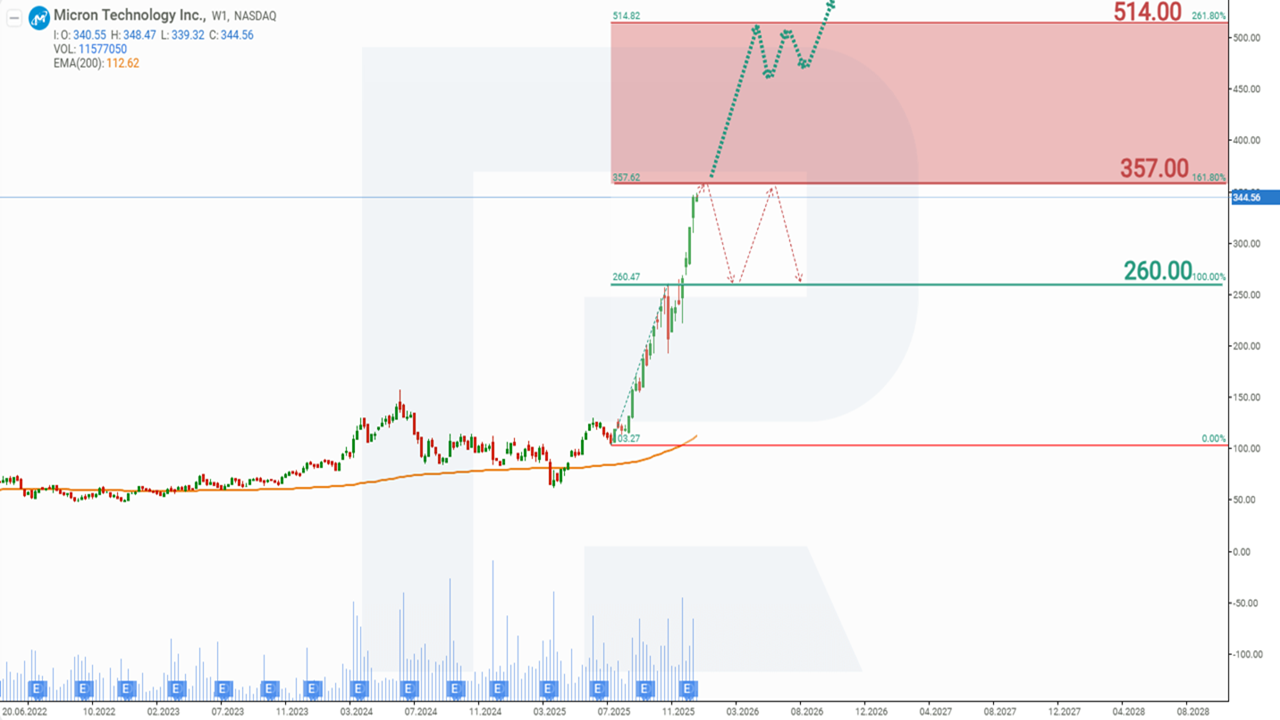
Between 2022 and 2024, Micron faced a downturn due to oversupply in memory chips and declining prices. This resulted in pressure on revenues and profitability. However, by late 2025 and into 2026, the trend began to reverse.
Rising demand for AI infrastructure and cloud computing has fueled a recovery in memory pricing. This shift has positively impacted Micron’s stock performance, leading to renewed investor confidence.
Institutional investors have also shown increased interest. Large funds are gradually increasing their exposure to semiconductor stocks, especially those positioned to benefit from AI growth. Micron fits well into this narrative due to its role in supplying high performance memory.
The broader market trend suggests that the semiconductor cycle is entering a growth phase again, which could support MU stock in the coming years.
Key Growth Drivers for Micron Stock
One of the biggest growth drivers for Micron is artificial intelligence. AI models require massive amounts of data processing and storage, which directly increases demand for advanced memory solutions. High bandwidth memory, in particular, is becoming essential for training and running large AI systems.
Data center expansion is another major factor. Companies like Amazon, Google, and Microsoft are investing heavily in cloud infrastructure. Every new data center requires significant memory capacity, creating steady demand for Micron’s products.
The automotive industry is also transforming. Electric vehicles and autonomous driving systems rely heavily on sensors, computing power, and data storage. This shift is increasing the need for reliable and high performance memory chips.
5G and edge computing are further contributing to growth. Faster connectivity enables more data generation and processing at the edge, which requires efficient memory solutions.
Government initiatives are also playing a role. Countries like the United States are investing billions into semiconductor manufacturing through policies aimed at reducing dependence on foreign supply chains. Micron is a direct beneficiary of these incentives, which support expansion and innovation.
Taken together, these drivers create a strong foundation for long term growth in Micron’s business.
Financial Analysis and Key Metrics
Micron’s financial performance reflects both the challenges and opportunities in the memory market. Revenue has historically been cyclical, rising during periods of strong demand and falling during downturns.
In recent quarters, revenue growth has started to recover as memory prices stabilize and demand improves. This recovery is expected to continue if AI and data center investments remain strong.
Profit margins have also been under pressure in the past due to declining chip prices. However, as pricing improves, margins are likely to expand again. Earnings per share have shown signs of recovery, which is a positive signal for investors.
Micron maintains a relatively strong balance sheet. The company holds a healthy amount of cash, which provides flexibility for research, development, and expansion. Debt levels are manageable compared to industry standards.
Valuation metrics are important when analyzing MU stock. The price to earnings ratio can vary significantly due to cyclical earnings. Forward valuation often provides a clearer picture, especially during recovery phases.
Compared to industry peers, Micron is often seen as undervalued during downturns and fairly valued or slightly premium during growth cycles. This makes timing an important factor for investors.
Risks and Challenges to Consider
Despite its strong position, Micron faces several risks that investors should not ignore.
The semiconductor industry is inherently cyclical. Periods of high demand often lead to oversupply, which then causes prices to fall. This cycle can impact revenue and profitability significantly.
Pricing pressure in memory chips is another challenge. Unlike some other semiconductor products, memory chips are more commoditized, which means pricing can fluctuate based on supply and demand dynamics.
Competition remains intense. Samsung and SK Hynix continue to invest heavily in research and production capacity. Any technological advantage from competitors could impact Micron’s market share.
Geopolitical tensions, particularly between the United States and China, add another layer of uncertainty. Trade restrictions or regulatory changes could affect supply chains and market access.
Supply chain disruptions are also a concern. Although conditions have improved since earlier global disruptions, the semiconductor industry still depends on complex international networks.
Understanding these risks is essential before making any investment decision.
Analyst Predictions and Future Outlook
Wall Street analysts have a generally optimistic outlook on Micron. Many have shifted their ratings toward buy or strong buy as the memory market shows signs of recovery.
Price targets for MU stock vary, but most forecasts suggest potential upside if current growth trends continue. Analysts are particularly bullish on Micron’s role in AI driven demand.
Looking ahead, the next three to five years could be transformative for the company. Demand for memory is expected to grow steadily as AI applications become more widespread and data consumption increases.
Micron’s investment in advanced memory technologies positions it well to capture this growth. High bandwidth memory and next generation storage solutions are likely to play a key role in future revenue.
While short term volatility is possible, the long term outlook appears promising based on current industry trends.
Is Micron Stock a Good Investment in 2026
Micron stock presents a mix of opportunity and risk. On the bullish side, the company is well positioned to benefit from major technology trends like AI, cloud computing, and automotive innovation.
On the bearish side, the cyclical nature of the memory market means that performance can fluctuate. Investors need to be prepared for periods of volatility.
For long term investors, Micron could be an attractive option. Those who believe in the continued growth of AI and data driven technologies may find value in holding MU stock over several years.
Short term traders, however, should pay close attention to market cycles and pricing trends, as these can have a significant impact on stock performance.
Ultimately, the decision depends on your risk tolerance and investment strategy.
Conclusion
Micron Technology remains a key player in the semiconductor industry, even if it does not always receive the same attention as some of its peers. Its role in supplying memory for critical technologies makes it an essential part of the modern digital economy.
The company is benefiting from strong growth drivers, including AI, data centers, and automotive innovation. At the same time, it faces challenges related to market cycles and competition.
For investors willing to navigate these ups and downs, Micron offers meaningful long term potential. Keeping an eye on industry trends and financial performance will be crucial moving forward.
FAQs
What does Micron Technology do
Micron develops and manufactures memory and storage solutions, including DRAM and NAND chips used in devices like smartphones, computers, and data centers.
Is Micron stock undervalued right now
Micron is often considered undervalued during downturns in the memory cycle. As demand recovers, its valuation may increase depending on earnings growth.
Why is Micron important for AI growth
AI systems require large amounts of memory to process and store data. Micron provides the memory technologies that support these workloads, making it a critical player in AI infrastructure.
What are the risks of investing in MU stock
Key risks include market cyclicality, pricing pressure in memory chips, strong competition, geopolitical tensions, and potential supply chain disruptions.
What is the future of memory chip companies
The future looks strong due to rising demand from AI, cloud computing, and connected devices. However, companies must navigate cycles and continue innovating to stay competitive.