

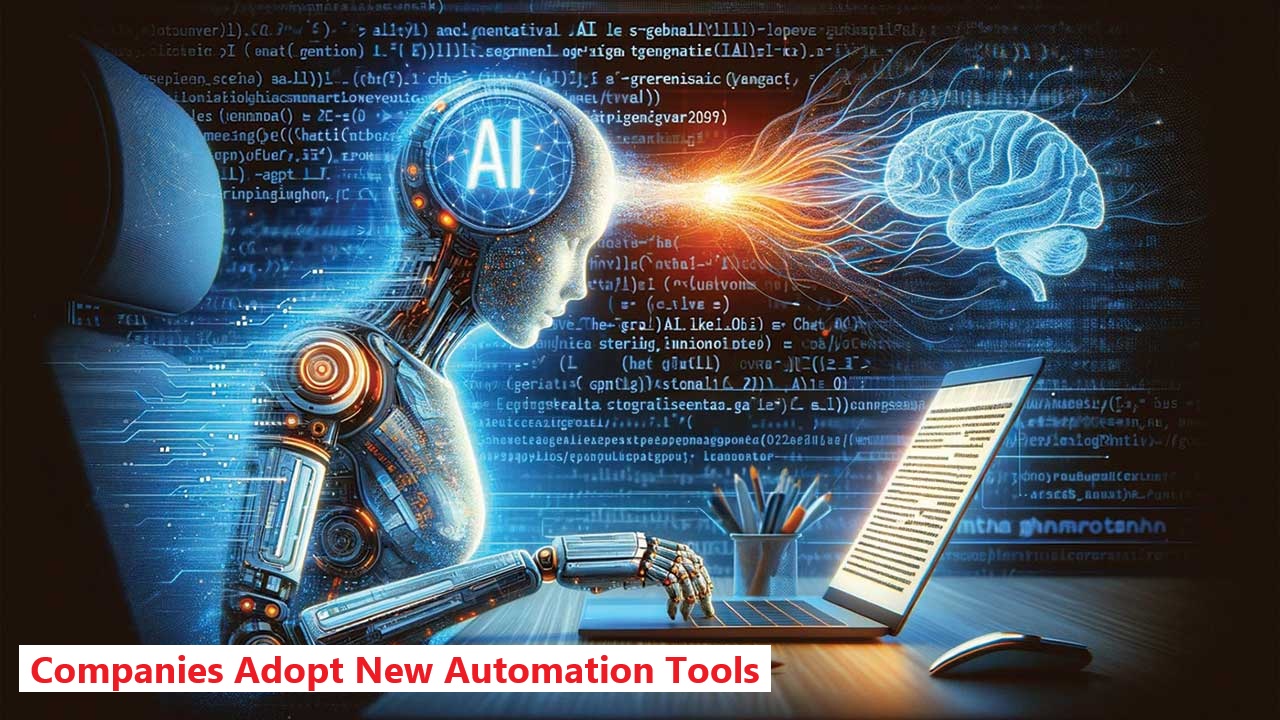
Artificial intelligence is no longer a futuristic concept discussed only in research labs. Today, it is becoming a core part of how businesses operate. From automating routine office tasks to assisting with complex decision making, AI technology is changing the future of work faster than many experts predicted.
Companies across industries are increasingly adopting AI powered automation tools to improve efficiency, reduce costs, and stay competitive in a rapidly evolving digital economy. Tools that once seemed experimental are now helping teams write content, analyze data, manage workflows, and even assist with customer support.
This shift is not just about replacing manual tasks. It is about creating smarter workplaces where humans and machines collaborate to achieve better results. In this article, we will explore how AI automation is transforming industries, reshaping jobs, and redefining the future of work.
What Is AI Automation in the Workplace?
AI automation in the workplace refers to the use of artificial intelligence technologies to perform tasks that normally require human effort. These systems can analyze data, recognize patterns, make predictions, and even learn from experience, allowing businesses to automate complex processes.
Traditional automation focuses on repetitive rule based tasks. For example, software might automatically process invoices or transfer data between systems. AI driven automation goes a step further by adapting and improving over time. It can analyze large datasets, understand language, and make decisions based on new information.
Modern companies are already using AI powered tools in many daily operations. Examples include chatbots that handle customer inquiries, AI writing assistants for marketing teams, predictive analytics tools for business planning, and smart scheduling systems that organize meetings automatically. These technologies are gradually becoming essential for efficient digital workplaces.
Why Companies Are Rapidly Adopting AI Tools
Businesses today face intense competition and constant pressure to operate more efficiently. AI tools are helping companies meet these challenges by improving productivity and simplifying complex workflows.
One of the main reasons organizations are investing in AI is the ability to handle repetitive tasks automatically. Activities such as data entry, report generation, and customer query responses can now be managed by intelligent systems, freeing employees to focus on strategic work.
Cost reduction is another major factor. AI powered systems can operate around the clock without fatigue, helping companies reduce operational expenses while maintaining consistent performance. For many organizations, automation also reduces the risk of human errors in critical processes.
Another powerful advantage is data driven decision making. AI can analyze massive amounts of information in seconds and uncover insights that would take humans much longer to identify. This allows leaders to make faster and more informed business decisions.
Because of these benefits, AI adoption is accelerating across startups, mid size businesses, and large global enterprises.
Key AI Technologies Transforming the Future of Work
Several powerful AI technologies are driving the transformation of modern workplaces. These innovations are helping businesses automate tasks, improve decision making, and enhance productivity.
4.1 Generative AI
Generative AI tools such as ChatGPT, Gemini, and Claude have quickly become valuable workplace assistants. These tools can generate written content, help developers write code, summarize research, and assist with brainstorming ideas. Marketing teams, writers, and software engineers are already using generative AI to speed up tasks that once took hours.
4.2 Machine Learning
Machine learning allows systems to learn from data and improve their performance over time. Businesses use machine learning for predictive analytics, customer behavior analysis, and demand forecasting. Retail companies predict buying trends, while financial institutions use machine learning models to detect fraud and assess risks.
4.3 Robotic Process Automation (RPA)
Robotic Process Automation focuses on automating repetitive digital tasks. RPA software can process invoices, manage payroll systems, update records, and handle routine administrative work. Many companies in finance, human resources, and customer service rely on RPA to reduce manual workloads.
4.4 AI Powered Assistants
AI powered workplace assistants are becoming common in modern offices. These digital copilots help employees summarize meetings, analyze documents, schedule appointments, and manage emails. By reducing administrative tasks, AI assistants allow professionals to focus on creative and strategic work.
Industries Experiencing the Biggest AI Transformation
Artificial intelligence is reshaping many industries, but some sectors are experiencing especially rapid transformation.
The technology sector is leading the way. Software development teams now use AI tools to generate code, detect bugs, and optimize applications. This has significantly accelerated the development process.
Healthcare is another industry seeing major changes. AI powered diagnostic systems can analyze medical images, assist doctors in identifying diseases, and help researchers discover new treatment options faster.
In finance and banking, AI systems are improving fraud detection, risk analysis, and automated customer service. Banks now use intelligent algorithms to monitor transactions and identify suspicious activity in real time.
Manufacturing has also embraced AI through robotics and predictive maintenance. Smart machines can monitor equipment performance and alert engineers before failures occur, reducing downtime.
Customer service departments are increasingly using AI chatbots and virtual assistants to handle common inquiries. This allows human support teams to focus on complex customer issues that require empathy and deeper problem solving.
How AI Is Changing Jobs and Employee Roles
The rise of AI automation is reshaping job roles rather than simply eliminating them. While some repetitive tasks are being automated, many new opportunities are emerging for workers who can adapt to AI driven environments.
Routine administrative work such as data entry, scheduling, and basic reporting is increasingly handled by automated systems. This shift allows employees to spend more time on creative thinking, strategy, and problem solving.
At the same time, demand is growing for new roles such as AI specialists, data analysts, machine learning engineers, and AI ethics experts. These positions focus on designing, managing, and improving AI systems used by businesses.
Another important change is the growing collaboration between humans and intelligent machines. Employees are beginning to work alongside AI tools that assist with research, decision support, and data analysis.
To succeed in this environment, professionals are developing new skills focused on digital literacy, analytical thinking, and adaptability. The future workplace will likely depend on people who can combine human creativity with the power of intelligent technology.
Benefits of AI Automation for Businesses
AI automation offers several important benefits for businesses looking to improve their operations.
One major advantage is faster decision making. AI systems can analyze large amounts of data quickly, providing insights that help leaders make informed choices in less time.
Productivity improvements are another key benefit. Automated workflows allow employees to complete tasks more efficiently while reducing manual workload. Teams can focus on higher value work rather than routine processes.
AI systems also help reduce human errors in repetitive tasks such as data processing or financial calculations. This leads to more reliable and accurate outcomes.
Customer experience can also improve through AI automation. Chatbots, personalized recommendations, and faster support responses help companies provide better service to their customers.
Together, these benefits make AI automation an increasingly attractive investment for organizations seeking long term growth.
Challenges and Concerns About AI in the Workplace
Despite its benefits, the growing use of AI in the workplace also raises several important concerns.
One common worry is job displacement. As automation handles more routine tasks, some workers fear their roles may become less relevant. While new jobs are emerging, the transition can still be challenging for many employees.
Ethical concerns also exist around bias in AI systems. If algorithms are trained on biased data, they may produce unfair results in hiring, lending decisions, or other sensitive areas.
Data privacy is another major issue. Many AI tools rely on large datasets that may include sensitive business or customer information. Protecting this data is essential to maintaining trust.
Because of these concerns, organizations are increasingly focusing on responsible AI policies, transparency, and proper oversight to ensure technology is used ethically and safely.
How Companies Can Prepare for an AI Driven Future
Preparing for an AI driven future requires more than simply adopting new technology. Companies must also develop strategies that help employees adapt and thrive alongside intelligent systems.
One of the most important steps is investing in employee upskilling. Training programs that teach data analysis, digital tools, and AI literacy can help workers stay relevant as technology evolves.
Organizations also need to invest in modern infrastructure that supports AI tools, including cloud computing platforms and secure data systems.
Developing responsible AI policies is equally important. Companies should establish guidelines that ensure fairness, transparency, and accountability when using AI technologies.
Finally, businesses should encourage collaboration between humans and AI tools rather than viewing automation as a replacement for workers. When used thoughtfully, AI can enhance human creativity and productivity rather than compete with it.
Future Trends: What the Workplace Will Look Like in the AI Era
The workplace of the future will likely be powered by intelligent systems that support employees in nearly every task.
AI driven digital workplaces will include smart assistants that manage schedules, summarize meetings, and provide real time insights during projects. These tools will act as productivity partners rather than simple software.
Autonomous decision systems may also become more common in industries such as logistics, finance, and supply chain management. These systems will analyze complex data and recommend optimal actions.
Another growing trend is hyper automation, where multiple technologies such as AI, machine learning, and robotic process automation work together to automate entire business processes.
Over time, AI tools will likely become as common as spreadsheets or email. Instead of being viewed as advanced technology, they will simply become standard productivity tools used in everyday work.
Frequently Asked Questions About AI and the Future of Work
Will AI replace human jobs?
AI will automate some repetitive tasks, but it is more likely to change jobs rather than completely replace them. Many roles will evolve to include working alongside AI tools.
What skills will be important in an AI powered workplace?
Skills such as critical thinking, digital literacy, data analysis, creativity, and adaptability will become increasingly valuable.
Which industries will adopt AI the fastest?
Technology, finance, healthcare, manufacturing, and customer service are among the industries adopting AI at the fastest pace.
How can businesses start using AI tools?
Companies can begin by identifying repetitive tasks that can be automated, experimenting with AI productivity tools, and training employees to work effectively with these systems.
Conclusion: AI and the Next Evolution of Work
Artificial intelligence is quickly becoming one of the most powerful forces shaping the future of work. From automating routine tasks to supporting complex decision making, AI technologies are transforming how businesses operate.
While challenges such as job transitions and ethical concerns remain, the opportunities created by AI are equally significant. Organizations that invest in skills, responsible policies, and smart technology strategies will be better prepared for this new era.
Rather than replacing humans, AI has the potential to become a powerful partner that enhances productivity, creativity, and innovation in the modern workplace.