

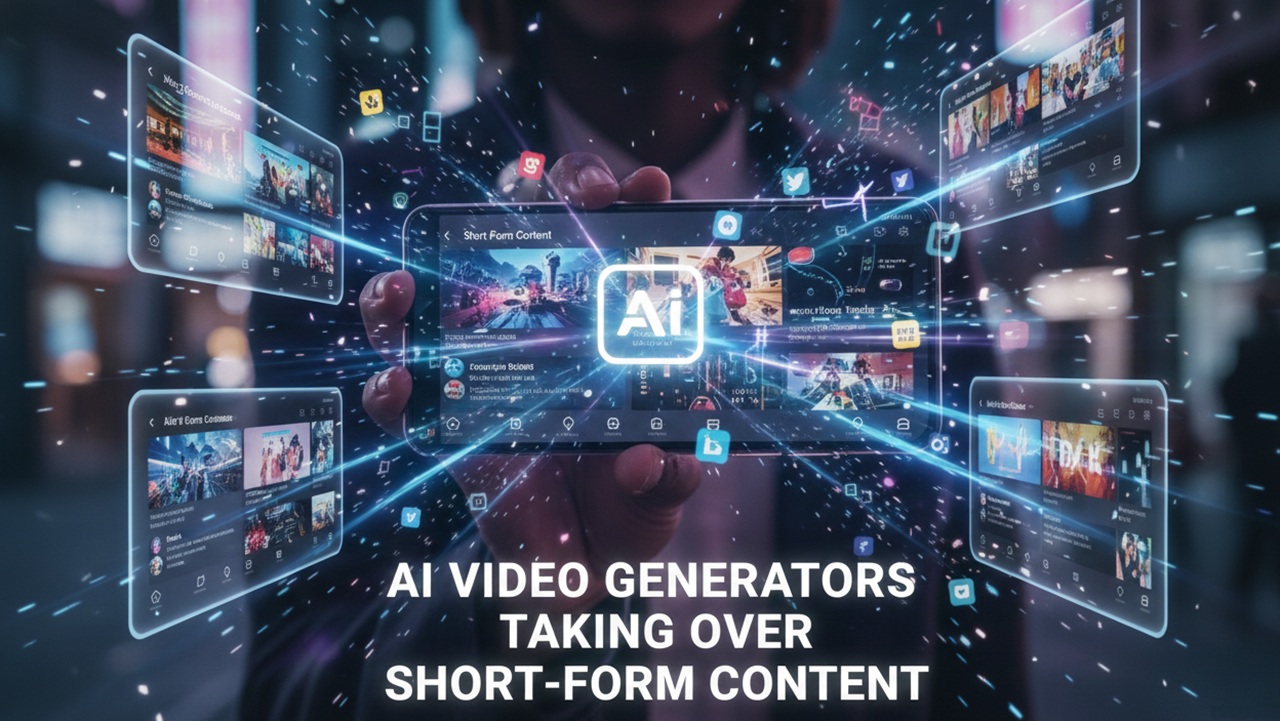
Short form video has changed the internet in a big way. The way people watch, scroll, and discover content today looks nothing like it did a few years ago. Instagram Reels, YouTube Shorts, and TikTok are not just places to be entertained anymore. They are where trends start, brands grow, and creators build entire careers.
In this environment, speed often wins over perfection. The creators who show up consistently tend to outperform those who disappear for weeks trying to polish one video.
That pressure is exactly why AI video generators are rising so quickly. Creating short videos the traditional way takes real effort. You have to plan, script, film, edit, caption, and post. Doing that every day can drain even the most motivated creator. AI tools step in to lighten that load, turning hours of work into minutes.
For many creators, AI is not about replacing creativity. It is about keeping up with the pace of modern content.
What Are AI Video Generators?
AI video generators are tools that use artificial intelligence to build videos with very little manual work. Instead of filming everything yourself, you can start with text, images, or a rough script and let the software assemble the video.
A common feature is text to video. You type a prompt or script, and the tool creates a short video with visuals, music, and captions. Some tools animate images into dynamic clips. Others can turn a script into a fully voiced reel with transitions and formatting that fits social platforms.
Many platforms now include AI voiceovers, digital avatars, automatic captions, and prebuilt scene styles. You do not need advanced editing skills or expensive gear. That accessibility is a big reason these tools are going mainstream.
Why Short Form Content Runs the Internet
Short videos dominate because they match how people actually behave online. Most users scroll fast and make snap decisions about what to watch. A quick, engaging clip fits that habit perfectly.
Algorithms also favor short videos. They often drive higher watch time, more replays, and more interaction. Platforms reward that by pushing short form content to larger audiences.
Mobile viewing adds another layer. People watch vertically on their phones during small breaks in the day. A thirty second video fits easily into those moments.
There is also a human side to this. Constant content creation is tiring. The pressure to post daily can lead to burnout. Short form content, especially when supported by AI tools, makes the workload more manageable.
How AI Is Changing Short Form Creation
Making a short video the traditional way can still take hours. Even a simple reel involves scripting, filming, editing, and captioning. AI can compress that workflow dramatically.
Cost is one major shift. You do not need a camera crew, editor, or studio to produce decent content. That opens the door for creators who previously could not afford professional production.
Skill barriers are lower too. Templates and automation handle much of the technical side. A beginner can create polished videos without mastering complex software.
Then there is scale. With AI, one creator can produce the volume that once required a team. On platforms where consistency matters, that is a serious advantage.
Types of AI Video Tools Creators Use
AI video tools are not all the same. Different ones serve different goals.
Text to video tools
These turn written scripts into complete videos. They are popular for educational and informational content.
Avatar based video tools
These use digital presenters to deliver scripts. They are common in explainers, updates, and news style content where a “face” builds trust.
Faceless video generators
These rely on stock footage, text overlays, and voiceovers. They are widely used in niches like motivation, finance facts, and storytelling.
Caption and hook focused tools
Some tools specialize in engagement. They help craft strong openings, animated captions, and pacing designed to hold attention.
None of these tools automatically make content good. They simply make production faster.
How Creators Are Actually Using AI Videos
Many faceless accounts already run heavily on AI workflows. Motivation pages, quote accounts, history facts channels, and storytelling pages often use AI for scripting, visuals, or voiceovers.
News and trend focused creators use AI to move fast. They can summarize events and publish before a topic cools down.
Educational and motivational creators benefit from AI voiceovers and captions, especially if they are camera shy or just starting out.
Brands are using AI for product highlights, feature breakdowns, and simple ads. Consistent educational clips about a product can build trust over time.
These are not experiments anymore. They are working systems for many creators.
Benefits for Creators and Brands
Consistency becomes easier. Posting regularly no longer feels overwhelming, and that can improve visibility.
Testing is faster. You can try different hooks, formats, and angles without spending weeks on each idea.
Costs drop because fewer roles are needed. Editing, voiceovers, and captioning can be automated.
Most importantly, feedback loops get shorter. Creators can see what works and adapt quickly. That agility can fuel faster growth.
AI gives leverage. It multiplies what a creator can do, but it does not replace their ideas.
Limitations and Risks
AI content can start to look similar if everyone uses the same templates. That sameness makes it harder to stand out.
Originality is another concern. AI is great at remixing patterns but weaker at expressing lived experience or emotion. Relying too much on automation can blur a brand’s identity.
Platforms are also watching for low quality, spammy, or misleading AI content. Poorly made videos can hurt reach.
And audiences still value authenticity. Human judgment, storytelling, and relevance matter. AI works best as support, not autopilot.
Will AI Replace Human Creators?
Full replacement is unlikely. Human creators bring context, humor, culture, and personal stories. Those are hard to automate.
A hybrid model is more realistic. AI handles repetitive tasks. Humans focus on ideas, strategy, and connection.
Creators who learn to collaborate with AI will likely have an edge over those who ignore it.
AI Videos and Social Media Algorithms
Algorithms care about engagement. Watch time, retention, and replays are key signals. Many AI tools are designed to optimize for these.
Hooks are especially important. Testing multiple openings quickly can reveal what keeps viewers watching.
Posting frequency also matters. AI makes it easier to stay active.
Large scale testing becomes possible. Creators can compare variations and refine their approach based on real data.
Discoverability and SEO
Captions, keywords, and hashtags still matter. Clear metadata helps platforms understand what a video is about.
Keyword aligned scripts can target search intent, especially on YouTube Shorts and Instagram.
One video can also be reused across platforms, which increases reach without starting from scratch each time.
When human strategy guides AI production, discoverability improves.
The Future of Short Form with AI
AI will likely become deeply woven into short form creation. Real time generation for trending topics is already emerging.
Personalized videos tailored to viewer preferences may grow as models improve.
Virtual creators and instantaitools.com could become more common for brands that want control and scale.
Still, the strongest channels will be guided by creative direction, not just automation.
Final Thoughts
AI video generators are becoming a normal part of short form content creation. For creators who want to grow and compete, understanding these tools is increasingly important.
The real winners will be those who mix AI efficiency with human creativity and judgment.
Tools do not build great content on their own. Strategy, taste, and storytelling still lead the way. AI just helps bring ideas to life faster in a world that moves quickly.