

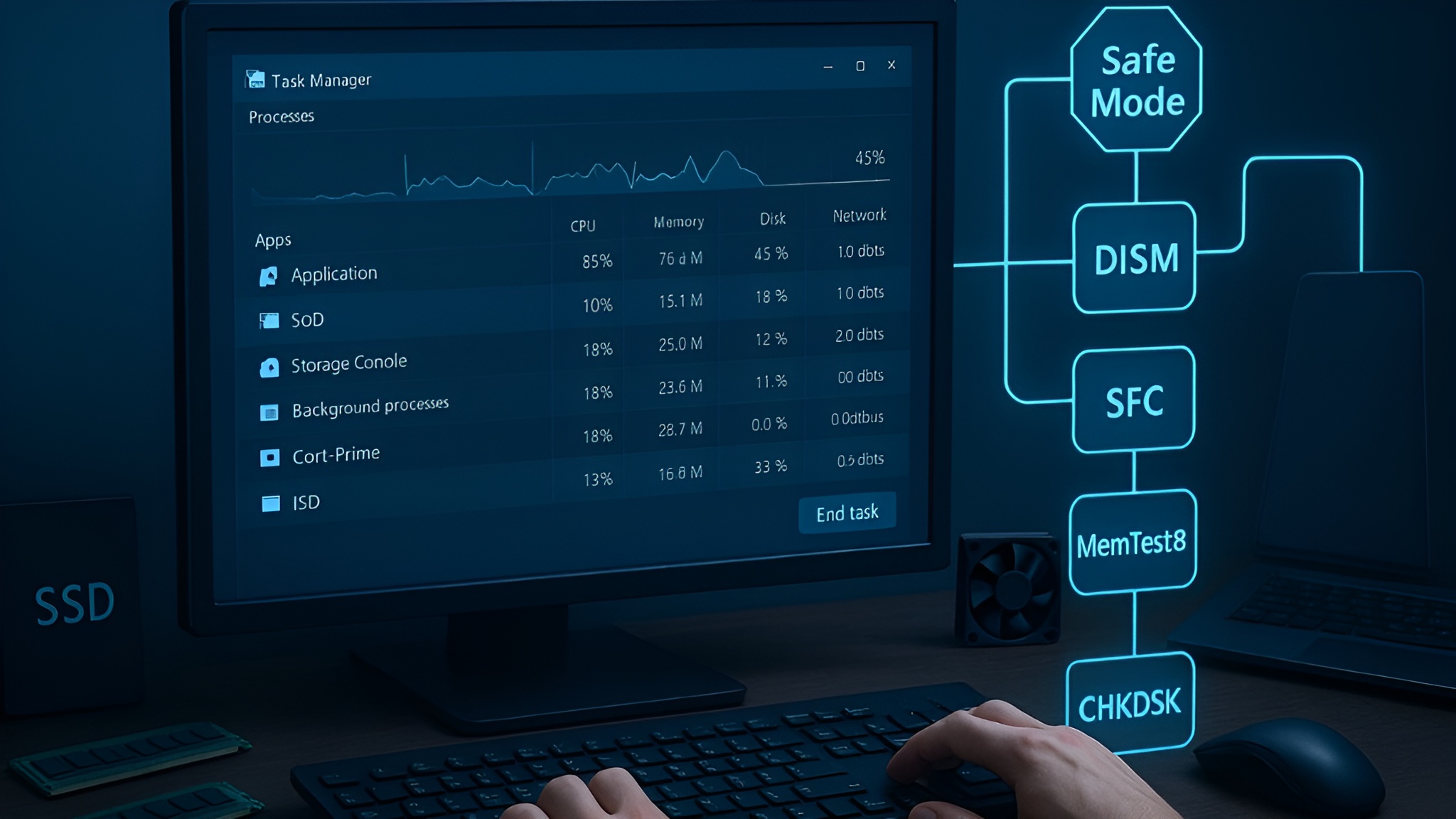
Windows 12 brings an array of new features, enhanced performance, and improved security compared to its predecessors. However, even the most advanced operating systems can face issues, from software glitches to hardware compatibility problems. Whether you are a tech-savvy user or a casual Windows enthusiast, knowing how to troubleshoot your Windows 12 system effectively is essential. This guide will walk you through the most common problems in Windows 12 and provide actionable solutions.
System Performance Issues in Windows 12
Slow Boot Times
Windows 12 is optimized for speed, but over time, boot times can increase due to unnecessary startup programs or background processes.
Solution:
- Press
Ctrl + Shift + Escto open Task Manager. - Navigate to the Startup tab.
- Disable apps that you don’t need at startup.
- Restart your PC to notice the improvement.
Additionally, running Disk Cleanup and ensuring your SSD firmware is updated can significantly reduce boot delays.
High CPU or RAM Usage
Sometimes, Windows 12 may lag or freeze due to excessive CPU or RAM usage.
Solution:
- Open Task Manager (
Ctrl + Shift + Esc) to check which processes consume the most resources. - Uninstall unnecessary apps or limit background applications.
- Consider upgrading RAM if high usage persists.
Tip: Windows 12 introduces a more advanced Resource Monitor, allowing you to track resource-hungry apps efficiently.
Driver Problems and Compatibility Issues
Drivers are crucial for hardware communication. Outdated or incompatible drivers can cause crashes, blue screens, or peripheral malfunctions.
How to Update Drivers in Windows 12
- Press
Windows + Xand select Device Manager. - Expand the hardware category (e.g., Display adapters).
- Right-click the device and choose Update driver.
- Select Search automatically for drivers.
Tip: Some manufacturers release exclusive Windows 12 drivers. Check your hardware brand’s website for the latest version.
Common Issues:
- Printers not responding
- Audio not working
- Display glitches
Updating drivers usually resolves these problems. If not, using Windows 12 Compatibility Mode can help run older applications without errors.
Windows 12 Update Errors
Windows updates are essential for security and functionality, but sometimes updates fail to install or cause system instability.
Fixing Update Errors
- Open Settings > Update & Security > Windows Update.
- Click Troubleshoot and select Windows Update.
- Follow the prompts to resolve common errors.
Other tips:
- Ensure sufficient disk space for updates.
- Temporarily disable antivirus software during updates.
- Use the Windows Update Assistant for manual updates.
Common Error Codes: 0x80070057, 0x80240034, 0x800f081f
Blue Screen of Death (BSOD) in Windows 12
Experiencing a blue screen can be alarming. It usually indicates a critical system error, often related to hardware or driver issues.
How to Fix BSOD
- Note the error code on the BSOD screen.
- Restart your PC in Safe Mode (
Shift + Restart). - Roll back recent driver updates.
- Run Windows Memory Diagnostic to check for RAM issues.
-
Use CHKDSK to scan and repair disk errors:
chkdsk /f /r
Tip: Windows 12 logs BSOD events in Event Viewer, making it easier to identify the exact cause.
Network and Internet Problems
Connectivity issues are common in Windows 12, whether it’s Wi-Fi dropping or Ethernet not working.
Troubleshooting Steps
- Run the Network Troubleshooter: Settings > Network & Internet > Status > Network Troubleshooter.
- Reset network settings:
- Open Command Prompt as Admin
-
Execute:
netsh winsock reset
netsh int ip reset
ipconfig /release
ipconfig /renew
ipconfig /flushdns
- Update your network adapter drivers.
- Restart your router or modem.
Tip: Windows 12 introduces improved Wi-Fi 6 support, which may require firmware updates on older routers to function optimally.
Software and Application Crashes
Applications may crash or refuse to open due to compatibility issues or corrupted files.
How to Fix
- Run the Program Compatibility Troubleshooter: Right-click the app > Properties > Compatibility > Run troubleshooter.
- Reinstall the application.
- Ensure Windows 12 app permissions are correctly set (Settings > Apps > App permissions).
For Microsoft Store apps, you can reset them: Settings > Apps > Apps & features > Select app > Advanced options > Reset.
File and Data Recovery Issues
Accidental deletion or file corruption can happen even on Windows 12.
Solutions:
- Check Recycle Bin first.
- Use Windows File History (Settings > Update & Security > Backup > File History).
- For critical loss, use third-party recovery tools compatible with Windows 12.
Tip: Enable OneDrive backup for important documents to reduce data loss risk.
Security and Privacy Troubleshooting
Windows 12 enhances security with features like Windows Defender SmartScreen and Enhanced Ransomware Protection.
Common Security Fixes
- Ensure Windows Defender is up to date.
- Remove suspicious apps using Settings > Apps.
- Use Windows Security > Virus & threat protection to run a full system scan.
Tip: Regularly review Privacy Settings to control app access to your camera, microphone, and location.
Advanced Troubleshooting Tools in Windows 12
Windows 12 comes with multiple built-in tools for troubleshooting:
- Event Viewer: Tracks all system logs for error analysis.
- Performance Monitor: Tracks CPU, memory, and disk usage trends.
- Reliability Monitor: Provides a timeline of system crashes and updates.
- System Restore: Allows reverting Windows 12 to a stable point in case of severe issues.
Tip: Combining these tools can provide a complete picture of your system health.
Proactive Tips for Preventing Windows 12 Problems
- Keep Windows 12 updated regularly.
- Install drivers directly from manufacturer websites.
- Avoid unnecessary startup programs.
- Perform disk cleanup and defragmentation (for HDD users).
- Regularly back up your system using Windows Backup or OneDrive.
- Use a reliable antivirus and enable firewall protection.
Extra Tip: Windows 12’s AI-powered diagnostics can suggest personalized fixes based on your usage patterns. Check Settings > System > Troubleshoot > Recommended Fixes.
Conclusion
Windows 12 is a powerful operating system with advanced features and a more secure, faster experience. However, issues can occur due to software, hardware, or user errors. This Windows 12 ISO provides solutions to common problems, from performance lags to network issues, BSODs, and app crashes. By following these steps and leveraging Windows 12’s built-in tools, you can maintain a smooth, efficient, and secure system experience.
Remember, prevention is better than cure. Regular updates, proper backups, and monitoring system performance will reduce troubleshooting needs and enhance your overall Windows 12 experience.